
The 10-Minute Yard Walk: Seven Places Mosquitoes Breed in Compton Backyards
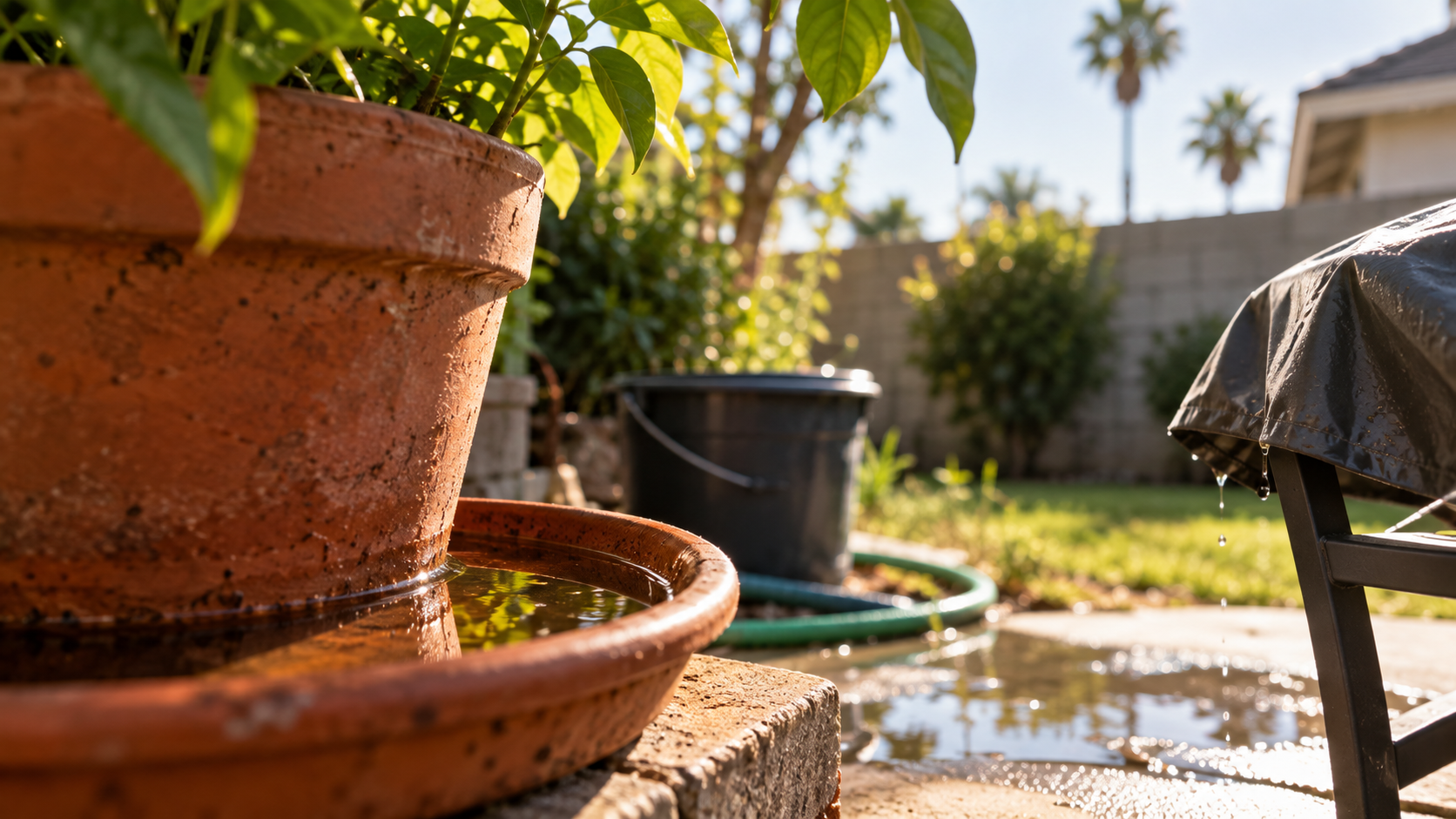
Most mosquito breeding around a home doesn't look like a mosquito problem, it looks like a little water that has been sitting too long in a plant saucer, a clogged gutter, a tarp, or a spot where the sprinklers pool. Compton Creek Mosquito Abatement District walks residents through the seven backyard locations where mosquitoes breed most commonly in Compton, Lynwood, Paramount, and Rancho Dominguez — what to look for at each one, what to do when you find standing water, and when to contact the District for help with water sources you cannot eliminate yourself. Free property inspections and mosquitofish are available to all residents within our service area.
Most mosquito breeding around a home doesn't look like a mosquito problem. It looks like a little water that has been sitting too long. Sometimes it is water sitting under a flowerpot. Sometimes it is a bucket behind the house or a drain that never completely dries. Once a week, take about 10 minutes and walk around your property. Look for water that has been sitting.
Seven Places to Check Every Week
Lift your pots and check the saucers underneath. Water can stay there after the rest of the yard looks dry. Check the area around your plants while you are there.
Empty saucers when you find standing water. If a saucer consistently holds water after watering, empty it as part of your regular routine — not just when you notice it.
Check around the sides and back of the house for containers left outside. Buckets, watering cans, storage bins and children's toys can all hold water.
Empty them when you are finished using them. Containers that are not being used should be turned over or stored somewhere they will stay dry.
Birdbaths and pet bowls need regular attention because they are meant to hold water.
Change the water regularly. Birdbaths should also be scrubbed before they are refilled. Pet bowls should be cleaned and given fresh water.
Leaves and debris can keep gutters from draining properly. Yard drains can have the same problem. Check them during your walk.
Clear debris so water drains freely. If water keeps collecting in the same drain or low spot, find out what is keeping it there. Persistent pooling should be reported to CCMAD.
Water can collect in folds you cannot see from across the yard. Check covers on barbecues, patio furniture, and outdoor equipment.
Lift tarps and empty any water you find. Adjust the cover so it does not continue collecting water in the same spot.
Most of the water you find in a Compton yard will not necessarily be from rain. Check around sprinkler heads, hose connections, and areas that receive regular irrigation.
A leak or too much irrigation can leave water sitting in the same place day after day. If you keep finding a wet spot, check the irrigation or hose nearby.
Pools and other permanent water features need to be maintained. Pay particular attention to pools or spas that are not being used, along with fountains and ornamental ponds where water may have stopped circulating.
What to Do During the Walk
You are looking for standing water. Walk around the property and check places you normally pass without looking closely.
Look closely at the spots you usually walk past. Move a pot if you need to. Lift a cover. Check the drain after the sprinklers have run.
When you find unnecessary standing water, empty it. Turn over containers that are not being used. Cover anything that needs to remain outside and could collect water.
Then check again the following week. Conditions around a yard change. Irrigation runs. Things get moved. Water can collect somewhere that was dry the last time you checked.
Found Standing Water You Can't Eliminate?
Contact Compton Creek Mosquito Abatement District at 310-933-5321 to report standing water or request assistance. Free property inspections and mosquitofish are available to all residents within our service area.
Contact CCMAD → Call 310-933-5321 →