
Back-to-School Mosquito Protection: Two Exposure Windows Most Parents Miss
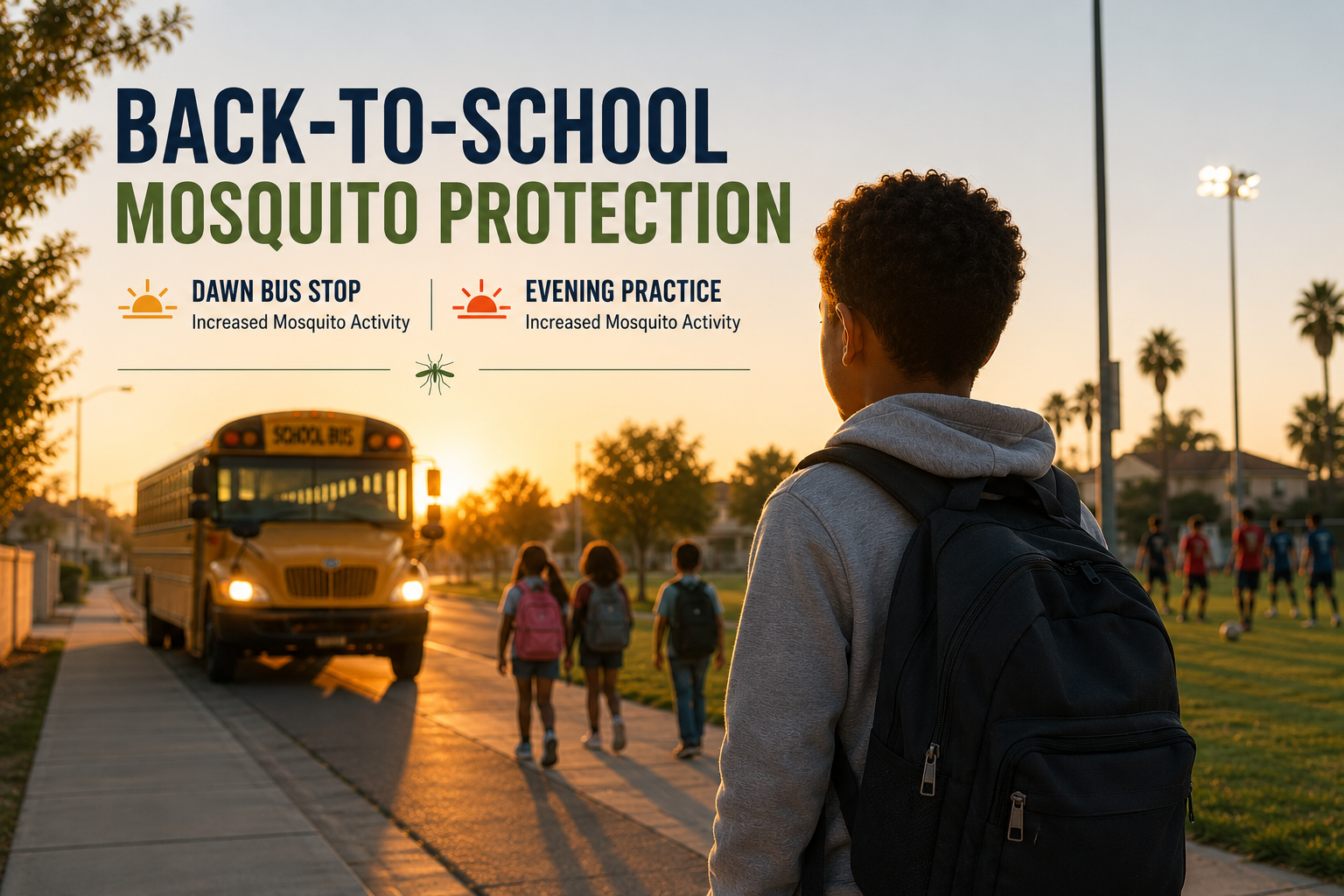
Back-to-school checklists rarely include mosquito protection — but the dawn bus stop and the evening sports practice are two daily exposure windows that overlap with periods of increased Culex mosquito activity. With California's first symptomatic West Nile Virus case of the 2026 season confirmed in nearby Long Beach, and El Niño conditions keeping mosquito breeding cycles active into August, Compton Creek Mosquito Abatement District covers what families in Compton, Lynwood, Paramount, and Rancho Dominguez need to do before the first bell rings — including repellent guidance for children and a free downloadable parent checklist.
Back-to-school checklists cover a lot of ground — supplies, physicals, emergency contacts, new shoes. There are two items most families in Compton, Lynwood, Paramount, and Rancho Dominguez are not thinking about yet: the dawn bus stop and the evening sports practice. Both can overlap with periods of increased mosquito activity. This guide covers what parents need to know before the first bell rings.
Why Mosquito Protection Matters More This Back-to-School Season
West Nile Virus is not new to California. Mosquito and vector control agencies monitor virus activity every summer through mosquito testing, human case surveillance, dead-bird reporting, and other indicators. This season, two factors make back-to-school awareness especially relevant.
The first is a confirmed human case. Earlier this summer, Long Beach reported California's first symptomatic human West Nile Virus case of the 2026 season — a resident who was hospitalized with neuroinvasive illness and is currently recovering at home. West Nile Virus activity continues to be monitored across California as the season progresses.
The second factor is environmental. El Niño conditions are present and strengthening across the Pacific, according to National Oceanic and Atmospheric Administration (NOAA). El Niño does not automatically produce more mosquitoes in every Southern California neighborhood — local mosquito abundance depends on whether water is available for breeding. But this season is also bringing sustained warmth and active summer irrigation, conditions that keep standing water available and mosquito breeding cycles moving. Mosquitoes can develop from egg to biting adult in as little as five to seven days in warm standing water — meaning the breeding activity that was running in June and July is still running as school begins in August.
What Does El Niño Have to Do With Mosquito Season?
NOAA reports that El Niño conditions are present and expected to strengthen through the remainder of 2026. El Niño can influence temperature and precipitation patterns across Southern California, but it does not automatically mean more mosquitoes in every community. Locally, mosquito abundance depends on whether standing water is available for breeding. In Southern California neighborhoods, irrigation runoff, containers, clogged drains, and ornamental water features can provide those breeding sites even during otherwise dry periods. El Niño changes the environmental backdrop — local standing water determines whether mosquitoes can exploit it.
The Two Back-to-School Exposure Windows Most Families Overlook
Most mosquito awareness focuses on summer evenings. Back-to-school season introduces two recurring daily exposure windows that are easy to miss because they feel routine rather than like outdoor events.
Children may spend several minutes standing outdoors at bus stops, often near landscaping, drainage areas, or shaded spaces where mosquitoes rest during dawn hours. Dawn is a period of increased activity for Culex mosquitoes — the species most associated with West Nile Virus in California.
Culex mosquitoes are generally most active from dusk through the nighttime hours. Evening practice places children outdoors during this window. Physical activity also increases heat and carbon dioxide output — two of the biological signals mosquitoes use to locate hosts.
The Morning Bus Stop Routine
A few simple additions to the morning routine reduce your child's exposure during the bus stop window. These take under two minutes and are straightforward to build into a consistent habit before the school year gets busy.
- Apply an EPA-registered repellent to all exposed skin before your child leaves the house — not at the stop. Repellent needs to be on before exposure begins, not after mosquitoes appear.
- Wear long sleeves when practical. A lightweight long-sleeve layer reduces the amount of exposed skin during morning hours.
- When possible, wait in an open area away from dense vegetation and standing water rather than a heavily shaded, still-air spot.
Evening Sports Practice: Higher Exposure, Straightforward Solutions
Evening practice may present greater mosquito exposure than the morning bus stop period. Culex mosquitoes are generally active during dusk and evening hours, physical activity increases heat and carbon dioxide output, and irrigation runoff can create standing water near fields, dugouts, and sideline drainage edges.
- Pack EPA-registered repellent in the gear bag. Apply before practice begins and reapply according to label directions.
- A lightweight long-sleeve layer for warmups and cooldowns reduces the amount of exposed skin during the evening window.
- Do not allow young children to apply repellent themselves. Adults should apply repellent to their own hands first, then gently apply to the child's exposed skin. Avoid the child's hands, eyes, mouth, cuts, and irritated skin.
Choosing Repellent for Children
Repellent age restrictions vary by product. The U.S. Environmental Protection Agency registers insect repellents and evaluates their safety — but age guidance depends on the specific product formulation, not a universal rule. Always check the EPA registration number and follow the age directions on the label before applying any repellent to a child.
Oil of Lemon Eucalyptus (OLE) is a plant-based option the CDC recommends for protection against mosquitoes that may carry West Nile Virus. Age restrictions can vary even among OLE products, which is why checking the specific product label matters. CDC guidance recommends using physical barriers — such as stroller netting — rather than insect repellent on infants younger than two months.
Check Your Yard Before the School Year Gets Busy
This season's environmental conditions — sustained warmth and active irrigation — have kept the mosquito breeding cycle running at a pace that makes the weekly yard check more important than in a typical August. Mosquitoes do not need a pond or a neglected pool. They need a bottle cap of standing water and about a week of warm weather.
Before school schedules take over the household routine, walk your yard once and address the most common sources: flower pot saucers, gutters, bird baths, kids' outdoor toys, and low spots in garden beds where irrigation water collects. A quick check every week is more effective than a one-time cleanup at the beginning of the season — it eliminates the 5–7 day development window mosquitoes need to complete a breeding cycle.
For Coaches, Schools, and Athletic Programs
Compton Creek Mosquito Abatement District provides mosquito prevention education for schools and community organizations within our service area. If your program is interested in an educational presentation or wants to report persistent standing water near school athletic facilities, contact us directly.
That work already extends into local classrooms: CCMAD provides hands-on mosquito prevention education to 4th, 5th, and 6th grade students at all 24 elementary schools in the District's service area.
Take the Parent Checklist With You
Download the Back-to-School Family Mosquito Protection Checklist — a quick printable reference for the morning bus stop, evening practice, repellent guidance, weekly yard checks, and CCMAD contact information. This is the thing you stick on the fridge.
Found a Dead Bird? Report It.
Dead crows, ravens, and jays are early indicators of West Nile Virus activity in a given area. Your report supports community surveillance. Call the California Dead Bird Reporting Hotline.
Help Protect the Places Children Spend Their Day
Back-to-school mosquito protection does not require a complicated new routine. Apply repellent before dawn exposure, prepare for evening practice, and check the places around your home and school where water can collect. If you see persistent mosquito activity or standing water near your home, child's school, bus stop, or recreation field — contact Compton Creek Mosquito Abatement District.
Contact CCMAD → ⬇ Download ChecklistRepellent guidance based on current CDC and EPA recommendations. Visit epa.gov/insect-repellents for the most current product information and age guidance. West Nile Virus surveillance: cdph.ca.gov and longbeach.gov. El Niño status: noaa.gov.