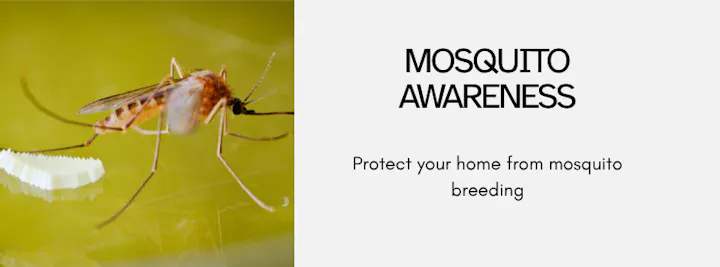
What Every Resident Should Know During National Mosquito Control Awareness Week
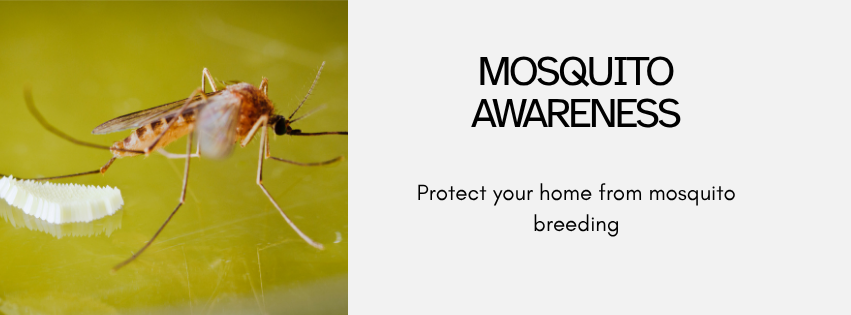
National Mosquito Control Awareness Week runs June 21–27, 2026. This week, Compton Creek Mosquito Abatement District is sharing everything residents across our 12.5 square mile service area need to know — from the biology behind why mosquitoes breed so quickly, to what our team does in the field each week, to the free services available to every household in Compton, Lynwood, Paramount, and Rancho Dominguez right now.
Why National Mosquito Control Awareness Week Matters
National Mosquito Control Awareness Week is observed each year to increase public understanding of mosquito-borne diseases, the importance of mosquito prevention, and the essential role that local mosquito control agencies play in protecting community health. Established by the American Mosquito Control Association (AMCA), the week serves as an annual reminder that effective mosquito control is not accomplished by any single agency or action — it requires an ongoing partnership between local districts and the residents they serve.
For communities like ours in the southeast Los Angeles County area, that partnership is especially important. Summer conditions in our region create near-ideal mosquito breeding environments: warm temperatures, irrigation runoff, and the kinds of residential water sources that sustain mosquito populations through the driest months. Awareness Week is our opportunity to share what we know, explain what we do, and make sure every resident has the information they need to protect their household.
How Mosquitoes Develop — and Why It Happens So Fast
One of the most frequently misunderstood facts about mosquitoes is how rapidly they reproduce. Under warm summer conditions, a mosquito can complete its entire development cycle — from egg to biting adult — in as few as seven to ten days. That window is shorter than most people realize, and it has direct implications for how residents should approach mosquito prevention at home.
The mosquito life cycle has four distinct stages:
Three of these four stages occur entirely in standing water. This is why water management — on both public and private property — is the foundation of effective mosquito control. A mosquito does not need a pond or a canal to breed. It needs as little as one bottle cap of stagnant water and roughly a week of warm weather.
What Compton Creek Mosquito Abatement District Does Each Week
Mosquito abatement is ongoing, year-round work — not a response to calls, and not limited to the summer months when residents notice mosquitoes most. The Compton Creek Mosquito Abatement District operates under an Integrated Mosquito Management (IMM) framework, a science-based approach that addresses mosquitoes at every stage of their life cycle using the most effective and environmentally responsible tools available.
Field Inspections
Our team conducts regular inspections of drainage channels, waterways, and catch basins throughout our service area — from the channels running through Compton and Rancho Dominguez to the residential corridors of Lynwood and Paramount. These inspections allow us to identify active breeding sites before mosquito populations reach levels that affect residents. When a site is found, treatment decisions are made based on the species present, environmental conditions, and the life cycle stage of the larvae detected.
Federally Approved Treatments
Compton Creek Mosquito Abatement District applies biological and chemical treatments that are reviewed and approved by the U.S. Environmental Protection Agency. Biological treatments — including the use of naturally occurring bacteria such as Bacillus thuringiensis israelensis (Bti) — target mosquito larvae specifically without affecting other organisms in the environment. All products used by the district are evaluated for ecological impact before deployment.
On-Request Property Inspections
Any resident within our service area can contact us to request a free property inspection. If you are experiencing recurring mosquito activity near your home or suspect a breeding site on or adjacent to your property, our team will come out to assess the situation and, where appropriate, provide treatment at no cost to you.
What Residents Can Do to Reduce Mosquito Breeding at Home
Research consistently shows that the majority of residential mosquito breeding does not occur in public waterways or parks — it occurs on private property. Backyards, patios, and the spaces immediately surrounding homes are where most larvae are actually found during field inspections. This means that what residents do at home matters as much as what the district does in the field.
The following actions, taken consistently, have a measurable impact on local mosquito populations:
- Dump standing water from flower pot trays, buckets, children's toys, and any other containers that collect rainwater — mosquitoes need as little as one week and a bottle cap of water to breed
- Clean gutters and remove leaf debris regularly — clogged gutters are one of the most frequently overlooked residential breeding sites
- Cover rain barrels and water storage containers with tight-fitting lids or fine mesh screens
- Change bird bath water every three to five days, even when the water appears clean
- Check under tarps, in unused tires, and inside infrequently used outdoor items that may collect water
- Request a free property inspection from Compton Creek Mosquito Abatement District if mosquito activity near your home is persistent
West Nile Virus: Local Monitoring and What to Report
West Nile Virus (WNV) is the most commonly transmitted mosquito-borne illness in California, and it circulates in Los Angeles County every summer. Compton Creek Mosquito Abatement District coordinates with the California Department of Public Health and Los Angeles County to actively monitor WNV activity within our service area throughout the season.
When West Nile Virus activity is detected locally — through mosquito pool testing, dead bird reports, or other surveillance methods — the district may implement targeted mosquito control efforts and public outreach in areas of concern.
How Residents Can Help Track West Nile Virus
Dead bird reports — particularly crows, ravens, and jays — are one of the earliest indicators of West Nile Virus activity in a given area. If you find a dead bird of one of these species anywhere in Compton, Lynwood, Paramount, or Rancho Dominguez, please report it to the California Dead Bird Reporting Hotline at 1-877-968-2473 or online at westnile.ca.gov/report. These reports contribute to statewide surveillance efforts used by public health officials and mosquito control agencies to identify areas of concern and inform response activities.
Free Services Available to Every Resident in Our Service Area
Compton Creek Mosquito Abatement District offers a full set of public health services funded by and available to every resident in our service area. These services are used far less than they should be — often because residents do not know they exist.
Up to 500 mosquitofish per day provided to residents with backyard ponds, fountains, or ornamental water features. These fish consume mosquito larvae naturally, with no chemicals required.
Residents can request a no-cost inspection if they suspect a breeding site on or near their property. Our team assesses the situation and provides treatment where warranted.
Hands-on mosquito education for 4th, 5th, and 6th grade students at all 24 elementary schools in our service area — building community awareness at the household level.
Residents can report public standing water — in alleys, clogged drains, or neglected spaces. We investigate every report submitted within our service area.
All of these services are funded through district taxes paid by residents within our service area. If you have a pond or ornamental water feature, we strongly encourage you to call for mosquitofish before mosquito season reaches its peak. If you are seeing persistent mosquito activity near your home, call for an inspection. These services exist specifically for you.
What You Can Do Today
-
🐟
Request Free Mosquitofish Have a backyard pond, fountain, or ornamental pool? One call gets you up to 500 fish — a natural, chemical-free solution for the season.
-
🔍
Schedule a Free Property Inspection Noticing more mosquitoes than usual near your home? Our team will come out, assess, and treat at no cost to you.
-
📸
Report Standing Water See water sitting in an alley, a clogged drain, or an abandoned lot in your neighborhood? Report it. We follow up on every submission.
-
🐦
Report a Dead Bird — (877) 968-2473 Found a dead crow, raven, or jay? Call the California Dead Bird Reporting Hotline. Your report helps track West Nile Virus activity in our area.
-
📲
Follow CCMAD for Weekly Updates We're posting one focused topic per day June 21–27 on Instagram, Facebook, and X. Follow along for tips, local updates, and reminders all week.
Follow Along All Week
One focused topic per day, June 21–27, across Instagram, Facebook, and X.
Ready to Take Action?
Contact Compton Creek Mosquito Abatement District to request mosquitofish, schedule a free property inspection, or report a public breeding site in your area.
Contact CCMAD →